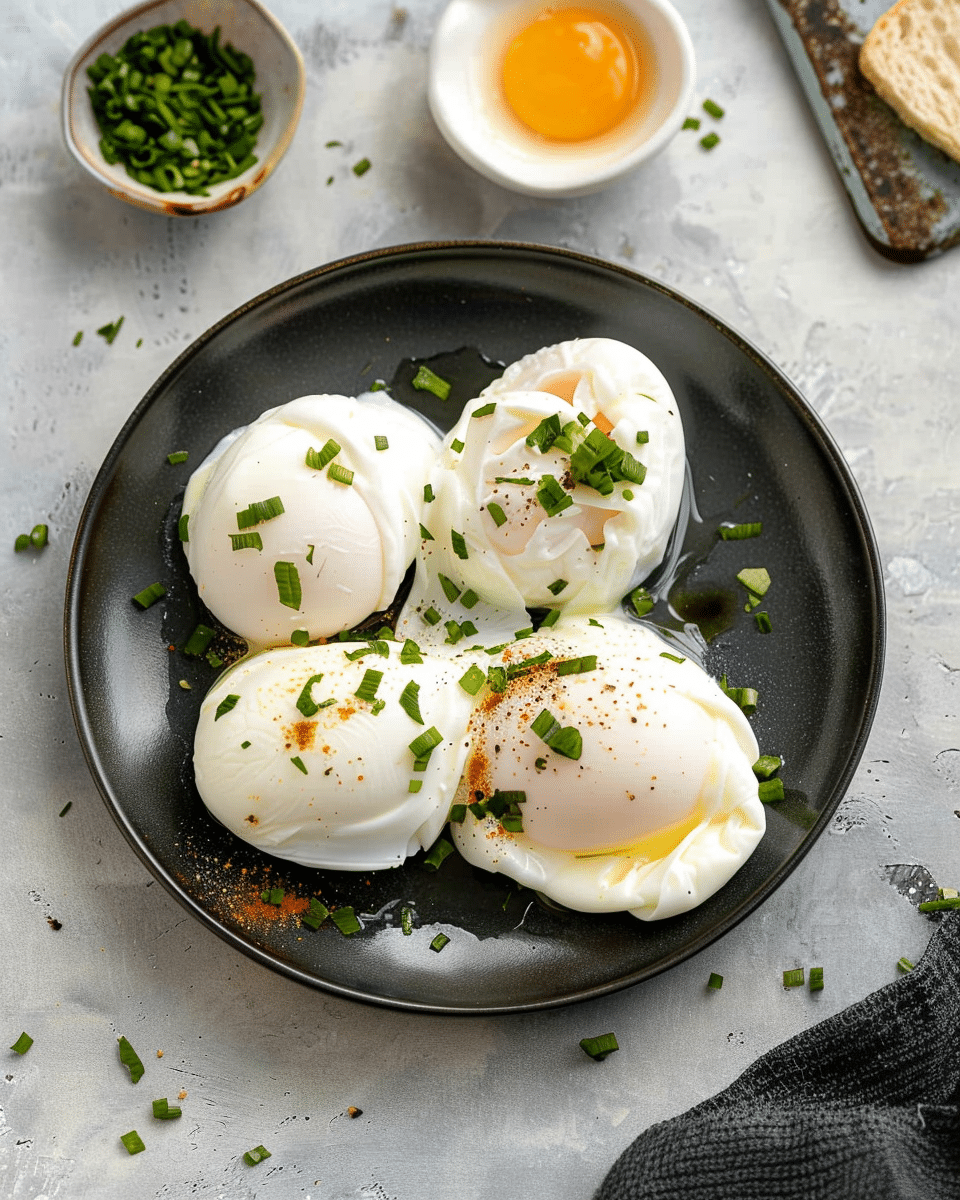
Poached eggs might seem tricky, but with the right method, they’re simple to master. You’ll love how quick they are to make—no fancy equipment required. They’re healthy, protein-rich, and elevate any meal with their rich, velvety texture. Whether you’re serving them with toast, over salad, or on a grain bowl, poached eggs add elegance to any dish.
Ingredients
(Tip: You’ll find the full list of ingredients and measurements in the recipe card below.)
Fresh eggs
Water
White vinegar (optional)
Salt (optional)
Directions
Fill a medium saucepan with about 3 inches of water. Bring it to a gentle simmer (not a rolling boil).
(Optional) Add a teaspoon of white vinegar to help the egg whites hold together.
Crack an egg into a small bowl or ramekin.
Stir the water in the pan to create a gentle whirlpool, then carefully slide the egg into the center.
Let the egg poach for about 3–4 minutes, until the whites are set but the yolk is still soft.
Use a slotted spoon to carefully lift the egg out and drain on a paper towel.
Repeat with additional eggs as needed. Season with salt and pepper before serving.
Servings and timing
This recipe makes 1 poached egg per serving (scale as needed). Prep time: 2 minutes Cook time: 3–4 minutes Total time: 5–6 minutes
Variations
Top poached eggs with hollandaise sauce for a classic eggs Benedict.
Serve on avocado toast with chili flakes and herbs.
Add to a bowl of ramen or miso soup for an extra protein boost.
Serve over sautéed spinach or roasted veggies for a light lunch.
Sprinkle with za’atar, smoked paprika, or everything bagel seasoning for a flavor twist.
Storage/Reheating
Poached eggs are best served fresh, but you can store them for short periods. To store, place cooked poached eggs in cold water in the fridge for up to 24 hours. To reheat, gently warm them in hot (not boiling) water for 30–60 seconds until heated through. Do not microwave, as the yolk may overcook or burst.
FAQs
How do I keep the egg whites from spreading?
Using fresh eggs is key—the fresher the egg, the firmer the whites. A bit of vinegar in the water also helps keep them together.
Do I need vinegar to poach eggs?
No, but vinegar helps the whites coagulate more quickly, making a neater poached egg.
What’s the best water temperature for poaching eggs?
Simmering water—about 180–190°F (82–88°C)—is ideal. Avoid boiling water, which can break up the egg.
Can I poach more than one egg at a time?
Yes, but add each egg carefully and make sure the water stays at a gentle simmer. Don’t overcrowd the pan.
How can I tell when the egg is done?
The white should be set and opaque, while the yolk remains soft. Gently touch it with a spoon to check firmness.
What if my egg sticks to the bottom of the pan?
Make sure the water is deep enough and stirred into a whirlpool before adding the egg. You can also gently nudge it with a spoon after a few seconds.
Can I make poached eggs ahead of time?
Yes, you can poach eggs ahead, chill them in ice water, and reheat in hot water before serving.
How do I make poached eggs without a whirlpool?
You can gently lower the egg into still simmering water and cook it as usual. It may not be as round, but it will still taste great.
Is it safe to eat poached eggs with runny yolks?
If you’re using high-quality, fresh eggs, runny yolks are generally safe. Use pasteurized eggs if you’re concerned.
What’s the best type of egg for poaching?
Very fresh large eggs work best, as their whites hold together better during poaching.
Conclusion
Perfect poached eggs are a simple yet elegant addition to any meal. Once you learn the technique, you’ll be making them with confidence in just minutes. Whether you’re topping toast, salad, or a breakfast bowl, poached eggs bring rich flavor and beautiful texture every time.
Perfect poached eggs are soft and delicate with a runny yolk and tender whites. They’re a healthy, elegant addition to breakfasts and brunches, great served on toast, salads, or grain bowls.
Author:Catherine
Prep Time:2 minutes
Cook Time:4 minutes
Total Time:6 minutes
Yield:1 poached egg (scale as needed)
Category:Breakfast
Method:Poaching
Cuisine:Universal
Diet:Low Calorie
Ingredients
Fresh eggs
Water
1 teaspoon white vinegar (optional)
Salt (optional)
Instructions
Fill a medium saucepan with about 3 inches of water and bring to a gentle simmer (not a rolling boil).
(Optional) Add a teaspoon of white vinegar to help the egg whites hold together.
Crack an egg into a small bowl or ramekin.
Stir the water to create a gentle whirlpool, then carefully slide the egg into the center.
Poach the egg for 3–4 minutes, until the whites are set but the yolk is still soft.
Use a slotted spoon to lift the egg out and drain on a paper towel.
Repeat with additional eggs as needed. Season with salt and pepper before serving.
Notes
Use very fresh eggs for the best results.Avoid boiling water; simmering is key to prevent eggs from breaking apart.To poach without a whirlpool, gently slide the egg into still water and cook as usual.Poached eggs can be stored in cold water in the fridge for up to 24 hours.To reheat, place in hot water (not boiling) for 30–60 seconds.