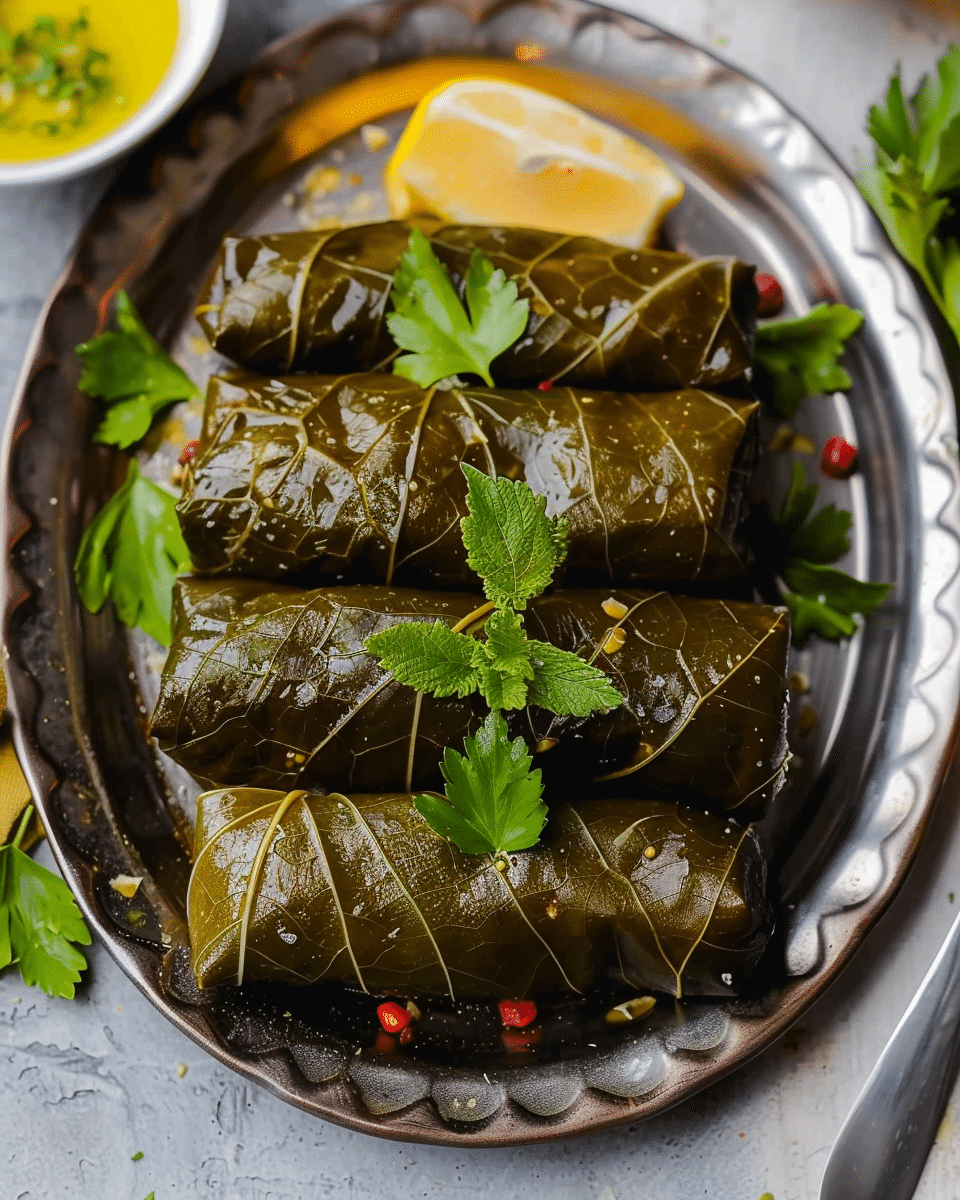
This dish is full of fresh, bold flavors and comforting textures. Whether served as a main dish or appetizer, Lebanese stuffed grape leaves are as beautiful as they are delicious. Making them can be a fun and relaxing process, and the results are always worth it. They’re naturally dairy-free, vegetarian-friendly (if made without meat), and perfect for prepping ahead.
Ingredients
(Tip: You’ll find the full list of ingredients and measurements in the recipe card below.)
Grape leaves (jarred or fresh, rinsed and drained)
Long-grain rice (uncooked)
Tomatoes, finely diced
Onion, finely diced
Fresh parsley, chopped
Fresh mint, chopped (or dried mint)
Lemon juice
Olive oil
Salt and pepper
Optional: ground beef or lamb (for non-vegetarian version)
Optional: garlic cloves, sliced
Optional: sliced potatoes or tomato rounds for layering in the pot
Directions
If using jarred grape leaves, rinse thoroughly and soak in warm water for 10–15 minutes, then drain. Trim stems if needed.
In a mixing bowl, combine rice, diced tomatoes, onion, parsley, mint, olive oil, lemon juice, salt, and pepper. If using meat, mix it in at this stage.
Place a grape leaf shiny side down. Add about 1 teaspoon of filling near the stem end. Fold the sides over the filling and roll tightly into a small cylinder. Repeat with all leaves.
Line the bottom of a large pot with extra grape leaves or sliced potatoes/tomatoes to prevent sticking.
Arrange stuffed grape leaves tightly in layers in the pot.
Add garlic slices between layers if using.
Pour lemon juice and enough water or broth to just cover the rolls. Place a small plate on top to keep them from floating.
Cover the pot and bring to a boil. Reduce heat and simmer for about 45–60 minutes, or until rice is cooked and grape leaves are tender.
Let cool slightly before serving warm, or chill and serve cold with extra lemon and olive oil.
Servings and timing
This recipe makes about 40–50 grape leaves, serving 6–8 people. Prep time: 40 minutes Cook time: 60 minutes Total time: 1 hour 40 minutes
Variations
Meat-Free: Stick to the vegetarian version with rice, herbs, and vegetables.
With Meat: Add ground beef or lamb to make them more filling and savory.
Spiced: Add a dash of allspice, cinnamon, or seven spice blend to the filling for deeper flavor.
Grape Leaf Alternatives: In a pinch, use blanched cabbage leaves for a similar rolled dish.
With Pomegranate: Add a splash of pomegranate molasses for a sweet-tart twist.
Storage/Reheating
Store leftover grape leaves in an airtight container in the refrigerator for up to 5 days. To reheat, place in a pot with a splash of water and warm gently over low heat until heated through. These also taste great cold or at room temperature. You can freeze them for up to 2 months—thaw overnight in the fridge and reheat as desired.
FAQs
Can I use fresh grape leaves?
Yes, but you need to blanch them in boiling water for a few minutes to soften before rolling.
Should the rice be cooked before stuffing?
No, use uncooked rice—it will cook inside the grape leaves as they simmer.
Can I use brown rice?
You can, but it takes longer to cook and may result in firmer rolls.
How do I keep the rolls from falling apart?
Roll them tightly and layer them snugly in the pot. Use a plate to weigh them down while cooking.
Are they served hot or cold?
They can be served either way. Vegetarian versions are often served cold, and meat versions warm.
Can I prepare them ahead of time?
Yes, you can make them a day in advance and store them in the fridge until ready to serve or reheat.
Can I use a rice cooker for the filling?
No need—since the rice cooks in the grape leaves, you just mix it raw with the other ingredients.
What do I serve them with?
Serve with lemon wedges, plain yogurt, or a drizzle of olive oil.
Can I cook them in broth instead of water?
Yes, vegetable or chicken broth adds extra flavor to the dish.
How do I know when they’re done?
They’re ready when the grape leaves are tender and the rice is fully cooked—usually after 45–60 minutes of simmering.
Conclusion
Lebanese stuffed grape leaves are a beautiful and flavorful dish that combines tradition, health, and comfort. Whether served at a family dinner or a festive gathering, they always impress. With their lemony flavor, fresh herbs, and satisfying texture, these little rolls are a must-try staple of Middle Eastern cuisine.
Lebanese stuffed grape leaves (warak enab) are tender grape leaves rolled with a flavorful mixture of rice, herbs, tomatoes, and sometimes meat, then simmered in a lemony broth. Served warm or cold, they are a delicious staple of Middle Eastern cuisine.
Author:Catherine
Prep Time:40 minutes
Cook Time:60 minutes
Total Time:1 hour 40 minutes
Yield:40–50 grape leaves (serves 6–8)
Category:Appetizer, Main Dish
Method:Simmering
Cuisine:Middle Eastern
Diet:Halal
Ingredients
1 jar (about 16 oz) grape leaves, rinsed and drained
1 cup long-grain rice, uncooked
2 medium tomatoes, finely diced
1 small onion, finely diced
1/2 cup fresh parsley, chopped
2 tbsp fresh mint, chopped (or 1 tbsp dried mint)
1/4 cup olive oil
1/3 cup fresh lemon juice (plus more for serving)
Salt and pepper, to taste
Optional: 1/2 lb ground beef or lamb
Optional: 2–3 garlic cloves, sliced
Optional: sliced potatoes or tomatoes for layering
Water or vegetable/chicken broth, as needed
Instructions
Soak grape leaves in warm water for 10–15 minutes if using jarred. Drain and trim stems.
In a mixing bowl, combine uncooked rice, tomatoes, onion, parsley, mint, olive oil, lemon juice, salt, and pepper. Add ground meat if using.
Place a grape leaf shiny side down. Add about 1 teaspoon of filling near the stem end. Fold sides over and roll tightly into a small cylinder. Repeat with remaining leaves.
Line the bottom of a large pot with extra grape leaves or sliced potatoes/tomatoes.
Layer the stuffed grape leaves tightly in the pot. Add garlic slices between layers if using.
Pour in lemon juice and enough water or broth to cover the rolls. Place a small plate over the top to keep them submerged.
Cover the pot and bring to a boil. Reduce heat and simmer for 45–60 minutes, until rice is tender and leaves are soft.
Let cool slightly before serving warm, or refrigerate and serve cold. Garnish with extra lemon juice and olive oil if desired.
Notes
Use fresh grape leaves if available—blanch them before rolling.Do not cook the rice beforehand; it cooks during simmering.Roll the leaves snugly to keep them from unraveling while cooking.Serve with plain yogurt or lemon wedges for added flavor.Use pomegranate molasses in the cooking liquid for a tangy variation.