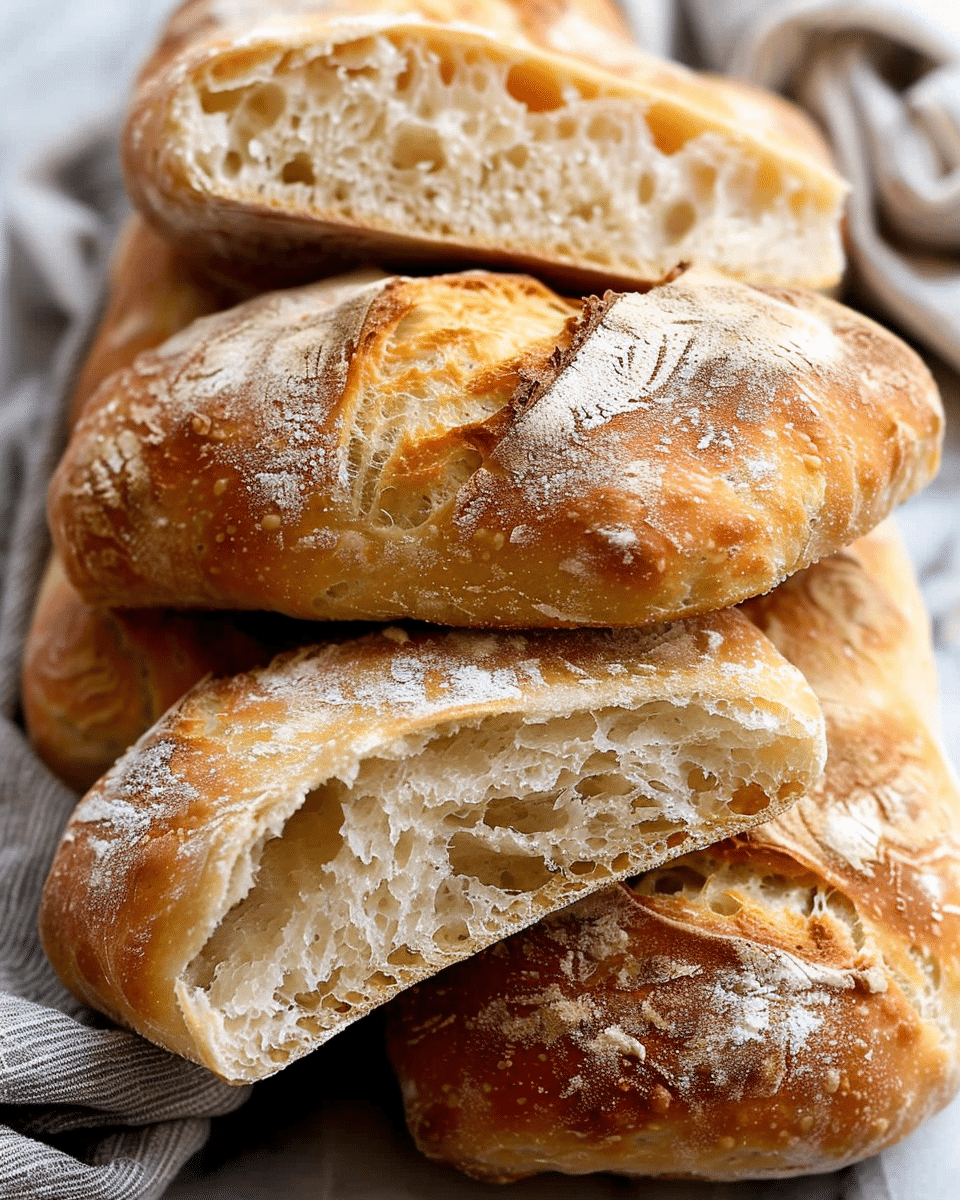
This ciabatta bread recipe captures the essence of traditional Italian baking right in your own kitchen. It’s made with simple ingredients and doesn’t require any fancy equipment. The high hydration dough creates that signature open crumb structure, and while the process involves some resting time, the actual hands-on work is minimal. Whether you’re a beginner baker or an experienced one, you’ll find this recipe approachable and satisfying.
Ingredients
(Tip: You’ll find the full list of ingredients and measurements in the recipe card below.)
All-purpose flour
Active dry yeast
Warm water
Salt
Olive oil (optional, for greasing)
Cornmeal or flour (for dusting)
Directions
Prepare the sponge (preferment): In a bowl, combine flour, water, and a small amount of yeast. Stir until smooth, cover, and let it sit at room temperature for 8–12 hours or overnight until bubbly.
Make the dough: Add the remaining flour, yeast, water, and salt to the sponge. Mix until combined. The dough will be very sticky and wet—this is normal for ciabatta.
First rise: Cover the bowl and let the dough rise for 1 to 2 hours, or until doubled in size.
Stretch and fold: With floured hands, perform a series of stretch-and-folds right in the bowl to build structure, resting for 30 minutes between each fold. Do this 2–3 times.
Shape the dough: Generously flour a work surface and gently turn out the dough. Divide into two pieces, handling as little as possible to preserve the air pockets. Shape into rustic, oblong loaves.
Second rise: Transfer the loaves to a parchment-lined baking sheet dusted with cornmeal or flour. Cover and let rise for about 45 minutes.
Preheat the oven: While the dough is proofing, preheat the oven to 450°F (230°C). Place a baking stone or an inverted baking sheet inside, and a pan of water at the bottom of the oven for steam.
Bake: Slide the loaves onto the hot baking surface and bake for 20–25 minutes, or until golden brown and the loaves sound hollow when tapped on the bottom.
Cool: Transfer to a wire rack and let cool completely before slicing.
Servings and timing
Servings: Makes 2 medium loaves (about 8–10 slices each) Prep time: 20 minutes (plus overnight sponge) Rise time: 4–6 hours total Bake time: 25 minutes Total time: Approximately 12–16 hours including resting
Variations
Whole Wheat Ciabatta: Replace up to 30% of the flour with whole wheat flour for a nutty flavor.
Olive Ciabatta: Fold in chopped kalamata or green olives during the final stretch and fold for added savoriness.
Herb-Infused: Add dried rosemary, thyme, or oregano to the dough for aromatic flavor.
Cheese Ciabatta: Incorporate shredded parmesan or asiago for a cheesy twist.
Garlic Ciabatta: Mix in roasted garlic cloves for a rich, mellow garlic flavor.
Storage/Reheating
Store leftover ciabatta at room temperature in a paper bag or wrapped in a clean kitchen towel for up to 2 days. For longer storage, wrap tightly in plastic wrap and freeze for up to 2 months. To reheat, thaw if frozen, then warm in a 350°F (175°C) oven for 5–10 minutes to restore crustiness.
FAQs
What makes ciabatta bread different from other breads?
Ciabatta is known for its high hydration dough, which results in large, irregular holes inside and a thin, crispy crust. It’s also typically more elastic and chewy than other breads.
Can I make ciabatta without a stand mixer?
Yes, ciabatta can be made by hand using a bowl and a spatula or spoon. The dough is sticky, so wet or oiled hands help during the mixing and folding process.
How do I get those big holes in ciabatta?
The key is high hydration, minimal handling, and proper fermentation. Avoid overmixing or deflating the dough during shaping.
Can I use bread flour instead of all-purpose flour?
Yes, bread flour will give the bread a chewier texture and slightly more structure due to the higher protein content.
Why is my ciabatta dough so sticky?
Ciabatta dough has a high water content by design, which makes it sticky and hard to handle. Use floured or oiled hands and avoid adding too much extra flour.
How do I know when the bread is done baking?
It should be golden brown and sound hollow when tapped on the bottom. An internal temperature of about 200–210°F (93–99°C) also indicates it’s fully baked.
Can I make smaller rolls instead of loaves?
Yes, you can divide the dough into smaller portions to make ciabatta rolls. Adjust the baking time to around 15–18 minutes.
What is the best way to store ciabatta?
Store it in a paper bag or wrapped in a cloth at room temperature for short-term. For longer storage, freeze it.
Can I freeze ciabatta dough before baking?
It’s best to freeze the baked bread rather than the dough, as ciabatta’s structure benefits from slow fermentation and delicate handling before baking.
What can I serve with ciabatta?
Ciabatta pairs wonderfully with soups, stews, cheeses, olive oil dips, or as a sandwich bread for paninis and bruschetta.
Conclusion
Homemade Ciabatta Bread is a true delight, offering a bakery-quality loaf with a crisp crust and open, chewy crumb. While the process requires some patience, the results are more than worth it. Whether served alongside a hearty meal or enjoyed on its own, this rustic Italian bread brings a touch of artisan magic to your kitchen.
Homemade Ciabatta Bread is a rustic Italian bread with a crisp crust and an airy, chewy interior. Perfect for sandwiches, dipping, or enjoying warm with butter.
Author:Catherine
Prep Time:20 minutes (plus overnight sponge)
Cook Time:25 minutes
Total Time:12–16 hours (including resting and rising)
Yield:2 medium loaves (8–10 slices each)
Category:Bread
Method:Baking
Cuisine:Italian
Diet:Vegetarian
Ingredients
4 cups (480g) all-purpose flour
1/2 teaspoon active dry yeast (for sponge)
1/4 teaspoon active dry yeast (for dough)
2 1/4 cups (540ml) warm water, divided
1 1/2 teaspoons salt
Olive oil (optional, for greasing)
Cornmeal or flour (for dusting)
Instructions
Prepare the sponge: In a bowl, combine 2 cups of flour, 1/2 teaspoon yeast, and 1 cup of warm water. Mix until smooth, cover, and let rest at room temperature for 8–12 hours or overnight until bubbly.
Make the dough: Add the remaining 2 cups of flour, 1/4 teaspoon yeast, 1 1/4 cups warm water, and salt to the sponge. Mix until combined. Dough will be very sticky.
First rise: Cover the bowl and let the dough rise for 1–2 hours, or until doubled in size.
Stretch and fold: With floured hands, stretch and fold the dough in the bowl. Rest for 30 minutes. Repeat 2–3 times.
Shape the dough: Flour a surface and gently turn out the dough. Divide into two and shape into rustic oblong loaves.
Second rise: Place loaves on parchment-lined baking sheet dusted with cornmeal. Cover and let rise for 45 minutes.
Preheat the oven to 450°F (230°C) with a baking stone or inverted baking sheet inside, and a pan of water at the bottom for steam.
Bake for 20–25 minutes, until golden brown and hollow-sounding when tapped on the bottom.
Cool completely on a wire rack before slicing.
Notes
Use wet or oiled hands to handle the sticky dough.Don’t deflate the dough while shaping to preserve air pockets.Use a thermometer (200–210°F) to confirm the bread is fully baked.Store in a paper bag at room temperature or freeze for longer storage.