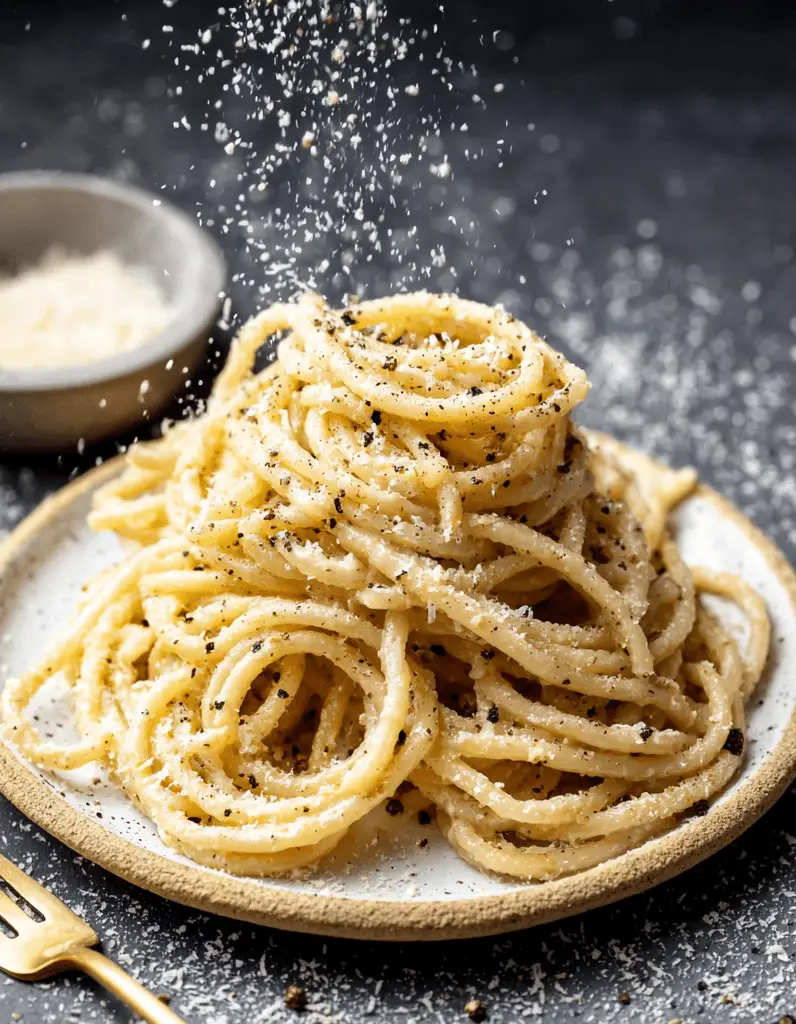
Use bucatini or rigatoni instead of spaghetti for a slightly different texture.
Mix Pecorino Romano with a small amount of Parmesan for a milder flavor.
Add sautéed mushrooms for an earthy twist.
Stir in a touch of butter for extra richness.
Storage/Reheating
Cacio e Pepe is best enjoyed immediately after preparation, as the sauce can thicken as it cools.
Store leftovers in an airtight container in the refrigerator for up to 2 days.
To reheat, warm gently in a skillet over low heat with a splash of water, stirring constantly to help restore creaminess. Avoid high heat, which can cause the sauce to clump.
Freezing is not recommended, as the texture may become grainy.
FAQs
What does Cacio e Pepe mean?
It translates to “cheese and pepper” in Italian, reflecting its simple ingredient list.
Why is my sauce clumpy?
Adding cheese over high heat can cause clumping. Remove the pan from heat before mixing in the cheese and add it gradually.
Can I use Parmesan instead of Pecorino?
Pecorino Romano is traditional and provides a sharper flavor, but Parmesan can be used for a milder taste.
How much should I salt the pasta water?
Use less salt than usual since Pecorino Romano is naturally salty.
What type of pasta works best?
Spaghetti and tonnarelli are traditional, but bucatini also works well.
Can I make it gluten-free?
Yes, simply use gluten-free pasta.
Why reserve pasta water?
The starchy pasta water helps create the creamy emulsion that forms the sauce.
Is this dish vegetarian?
Yes, as long as the cheese used is made without animal rennet if strict vegetarian guidelines are followed.
Can I prepare it ahead of time?
It’s best served immediately, as the sauce is at its creamiest right after preparation.
How do I get the perfect creamy texture?
Use finely grated cheese, add it off the heat, and incorporate reserved pasta water gradually while tossing continuously.
Conclusion
Cacio e Pepe proves that simplicity can create extraordinary flavor. With just pasta, cheese, and pepper, this Roman classic delivers a creamy, comforting dish that highlights technique and quality ingredients. It’s a timeless recipe that’s both humble and elegant.
Cacio e Pepe is a classic Roman pasta dish made with just a few simple ingredients: pasta, Pecorino Romano cheese, black pepper, and pasta water. Despite its simplicity, it delivers a rich, creamy, and deeply flavorful sauce created through technique rather than heavy ingredients.
Author:Catherine
Prep Time:20 minutes
Cook Time:35 minutes
Total Time:55 minutes
Yield:4–6 servings
Category:Main Dish
Method:Baking
Cuisine:Italian-Inspired
Diet:Vegetarian
Ingredients
12 manicotti pasta shells
2 cups ricotta cheese
1 1/2 cups shredded mozzarella cheese, divided
1/2 cup grated Parmesan cheese
1 large egg
2 cups marinara sauce
2 cloves garlic, minced
1 tablespoon olive oil
1 teaspoon dried Italian seasoning
1/2 teaspoon salt
1/4 teaspoon black pepper
2 tablespoons fresh parsley, chopped
Instructions
Preheat oven to 375°F (190°C).
Bring a large pot of salted water to a boil and cook manicotti shells until al dente according to package instructions. Drain and cool slightly.
In a skillet over medium heat, warm olive oil and sauté garlic for about 30 seconds until fragrant. Remove from heat.
In a large bowl, combine ricotta, 1 cup mozzarella, Parmesan, egg, sautéed garlic, Italian seasoning, salt, pepper, and parsley. Mix well.
Spread 1 cup marinara sauce evenly over the bottom of a baking dish.
Fill each manicotti shell with the ricotta mixture using a spoon or piping bag.
Arrange filled shells in a single layer in the baking dish.
Pour remaining marinara sauce over the top.
Sprinkle with remaining mozzarella cheese.
Cover with foil and bake for 25 minutes. Remove foil and bake an additional 10 minutes until cheese is melted and bubbly.
Let rest for 5 minutes before serving
Notes
Add cooked ground beef or Italian sausage for a meat-filled version.Mix in chopped spinach for added nutrition.Use part ricotta and part cottage cheese for a lighter filling.Substitute gluten-free manicotti if needed.Assemble up to 24 hours ahead and refrigerate before baking.Freeze unbaked manicotti for up to 3 months.